
Data Center Network Implementation Services
Field execution for network hardware deployment, firewall provisioning, optical transport expansion, and network optimization programs — across Cisco, Nokia, Ciena, and multi-vendor environments — with structured daily reporting, escalation management, and full commissioning documentation.
Or call us: +1 (321) 947-2184
Cisco · Nokia · Ciena
Execution to hyperscale operator standards
Provisioning to specification
Commissioning documentation per site
Trusted by infrastructure leaders and their strategic partners across North America and Latin America.
Also trusted by Tier-1 hyperscalers, global carriers, and colocation operators across the Americas — client identities subject to confidentiality agreements.
Scope Data Center Network Implementation
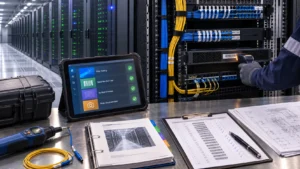
Network implementation is the physical and logical field work required to bring network hardware — routers, switches, firewalls, optical transport platforms — from delivery to operational status.
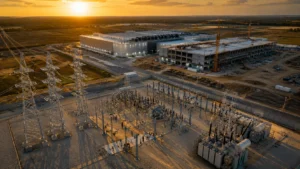
At hyperscale, implementation programs carry specific complexity: scale (10–50+ units across multiple sites), dependencies (FMC access, credentials, power supplies, third-party deliverables that must be tracked daily), documentation standard (BOM reconciliation, serial number logs, daily reports), and blocker management (what separates a well-run program from a delayed one is how quickly blockers are documented, owned, and driven to resolution).
Firewall and Security Hardware Deployment
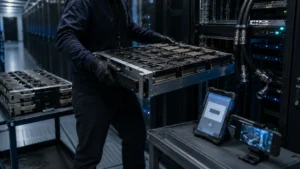
Equipment receiving & inspection
Serial number capture and BOM reconciliation per unit
Initial provisioning sequence
Step 1–3 per platform methodology with quarantine management for defective units
Management system connectivity
FMC/management system onboarding preparation and connectivity verification
Daily reporting
Progress, blockers, and pending actions — reported daily
How We Manage the Blockers That Every Program Produces
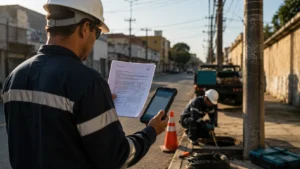
Every blocker is documented the day it is identified, with an owner and a next step — follow-up is proactive and daily.
Structured daily reporting — issues and risk log, pending actions with owners, and a next-day plan — so blockers get resolved, not accumulated.
Optical Transport Expansion Under Operator Fiber-Safety Protocols
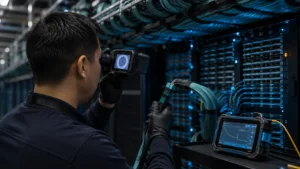
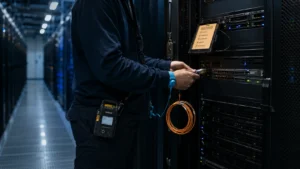
For optical transport implementation in live environments, operator fiber-safety confirmation is an absolute gate: fiber patching does not begin without written confirmation — documented and attached to the daily report. Change-window coordination with the operator’s NOC at the start of every day. Link normalization after patching confirms all optical paths within specification before handover.
Frequently Asked Questions
What network platforms does Hype Telecom support?
Cisco (Firepower, Catalyst, ASR, Nexus), Nokia (7750 SR, 7210 SAS, 7705 SAR), Ciena (Waveserver, 6500), and multi-vendor environments. For specific platform certifications, contact us with hardware requirements.
What is included in daily reporting for network implementation programs?
Structured daily reporting — issues and risk log, pending actions with owners, and a next-day plan — so blockers get resolved, not accumulated. Commissioning documentation is delivered per site at handover.
What is an operator fiber-safety confirmation?
An operator fiber-safety confirmation is explicit written authorization from the operator confirming that traffic protection mechanisms are active before production fiber paths are modified. At Hype Telecom, it is an absolute gate — fiber patching never begins without written confirmation, documented in the daily report.
Ready for a Network Implementation Program Where Blockers Get Resolved — Not Accumulated?
Every program surfaces external dependencies that do not appear in the original SOW — but show up in the commissioning date. The difference between a program that closes on schedule and one that doesn’t is not whether blockers appear. It is whether they are documented the day they surface, owned by a named party, and driven to resolution before the next daily report. Our field teams deliver that discipline across Cisco, Nokia, Ciena, and multi-vendor environments, across the Americas. The assessment is free. The conversation takes 30 minutes.
Solutions
Latest Article
Get in Touch
Build Your Telecom Advantage with Hype Telecom
Expanding across the U.S., Brazil, or LATAM? Our team accelerates your global connectivity and knowledge delivery.